
🎁 All roof cleaning work gets a free window cleaning service
Roof cleaning and moss removal explained
Moss on a roof is not just an appearance problem. A thick moss mat holds water against the tiles, which accelerates frost damage in winter, adds significant weight to the structure when saturated, and — most commonly of all — breaks away in heavy rain and washes straight into the gutters, where it blocks outlets and downpipes and starts water running down the walls instead.
Sam & Son Jet A Drive cleans roofs across Burgess Hill, Haywards Heath and the wider Sussex and South East area, on both domestic and commercial buildings. Roof cleaning is easily the most technical thing we do and the area where the most damage gets done by the wrong approach, so we work to a clear sequence: assess, clear the gutters, remove growth appropriately for the covering, treat with biocide, then leave nature to finish the job.
As always, the survey and quotation are free. On a roof, that visit matters more than usual — we need to see the covering, the pitch, the access and the condition of the ridge and verges before we can sensibly price anything.
Recent roof cleaning jobs in Burgess Hill, Haywards Heath and Sussex
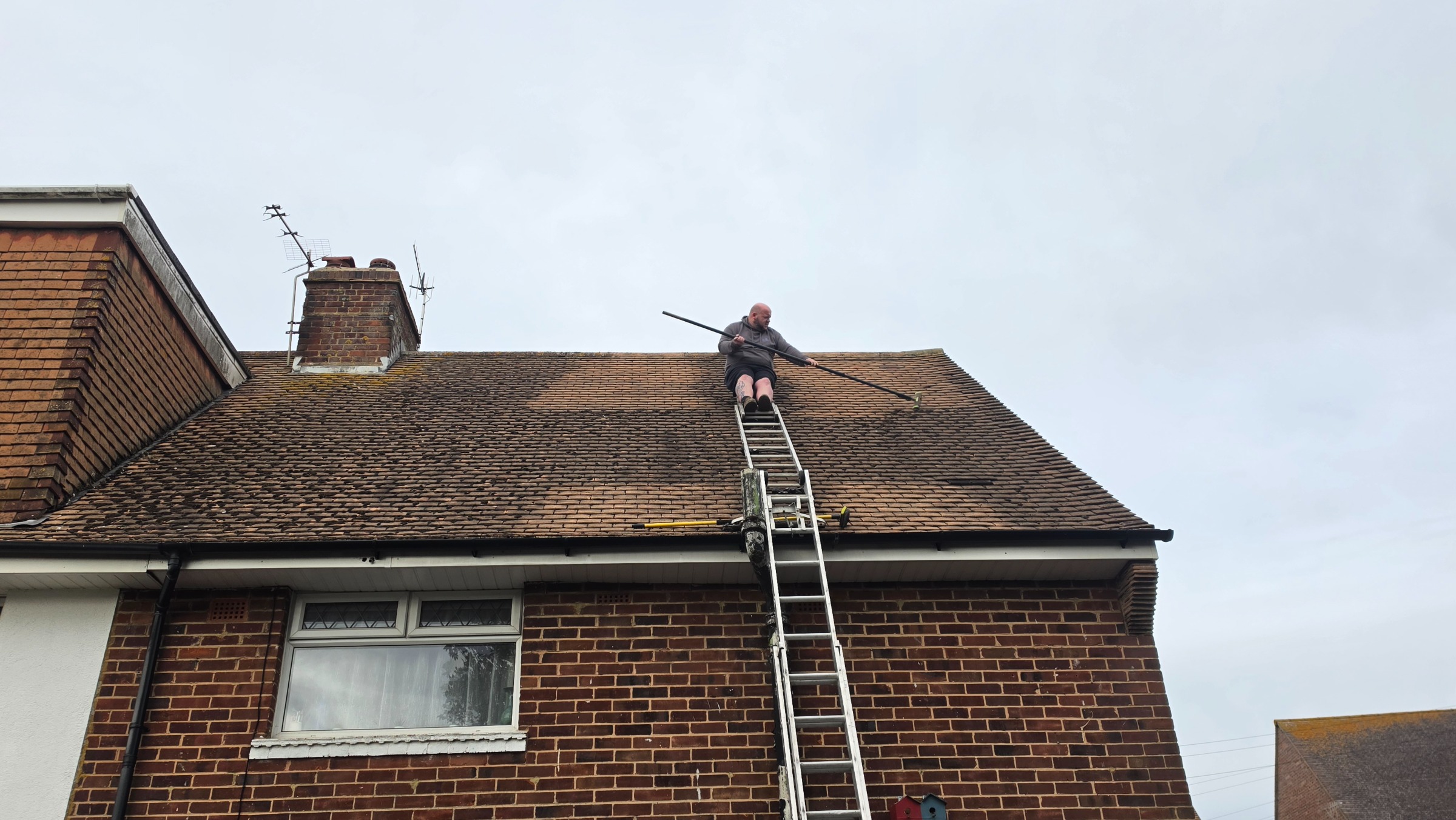
Hand Roof Cleaning And Gutter Clearance In Brighton And Hove
Roof cleaning by hand in Brighton This job was a roof clean at a property in Brighton and Hove, carried out by hand rather than with a pressure washer. Working…
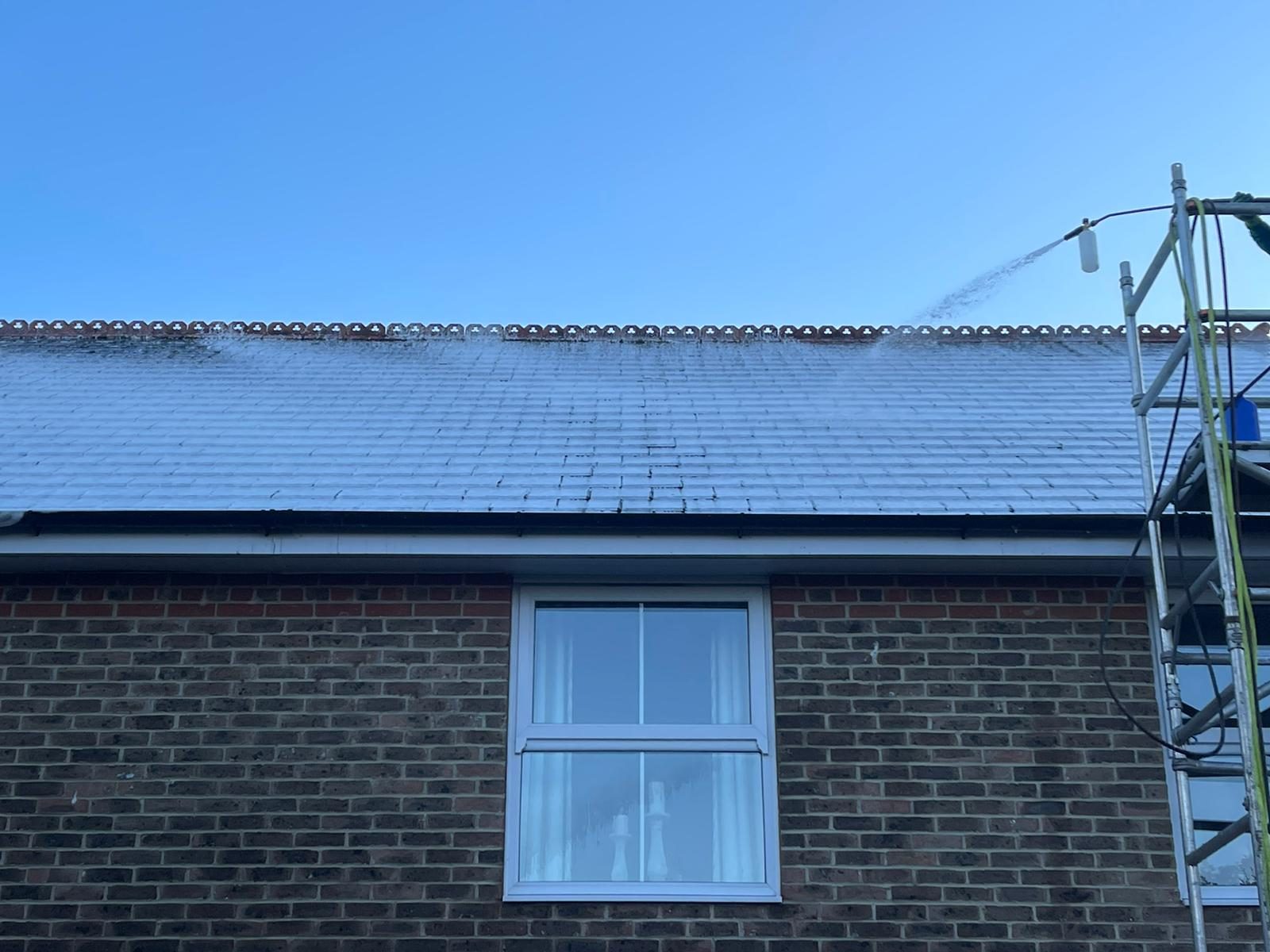
Roof cleaning and bio side
Roof cleaning across the Sussex countryside We recently travelled across the Sussex countryside to assist a homeowner who was concerned about the deteriorating…
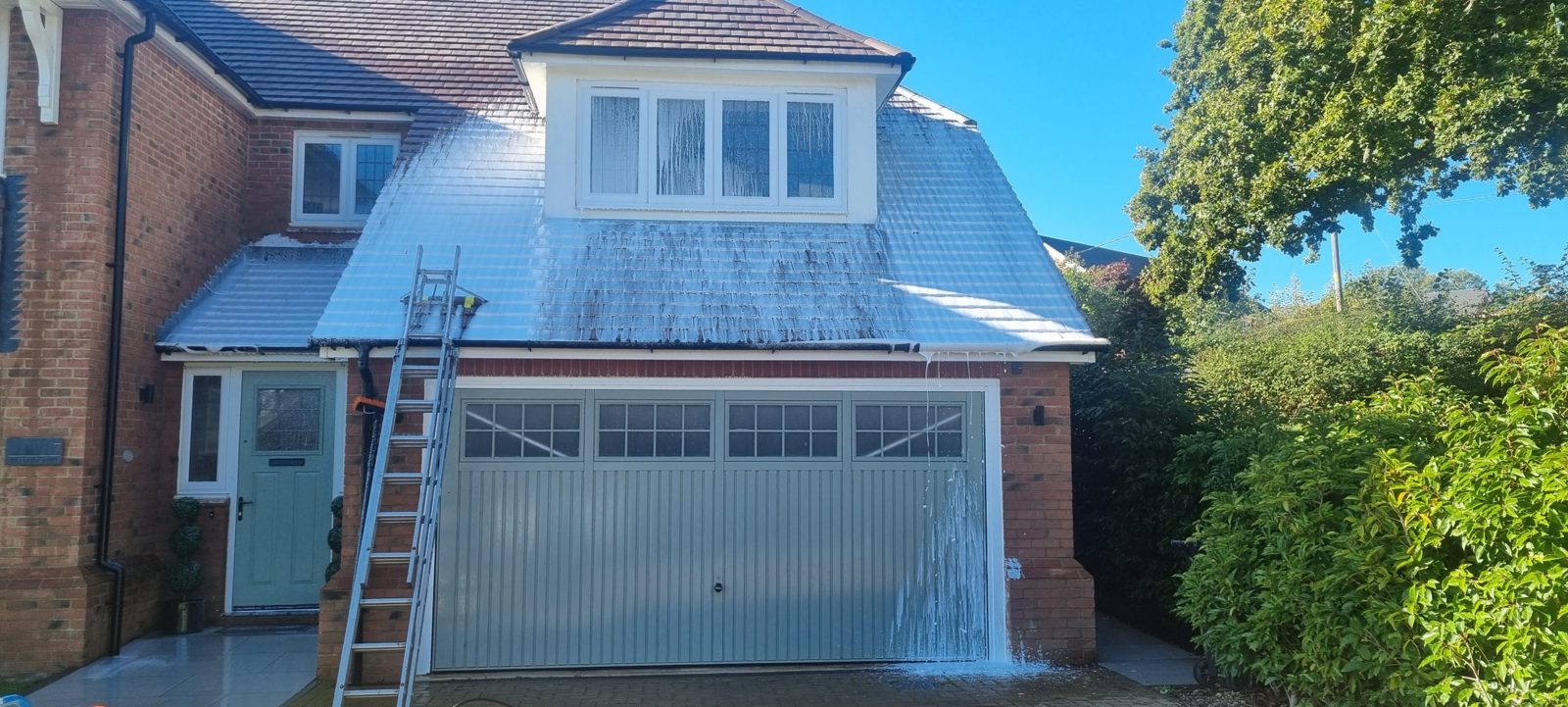
Roof cleaning and bio treatment
Roof cleaning in Burgess Hill We were recently called out to a residential property in Burgess Hill to address a roof that had become heavily weathered and…
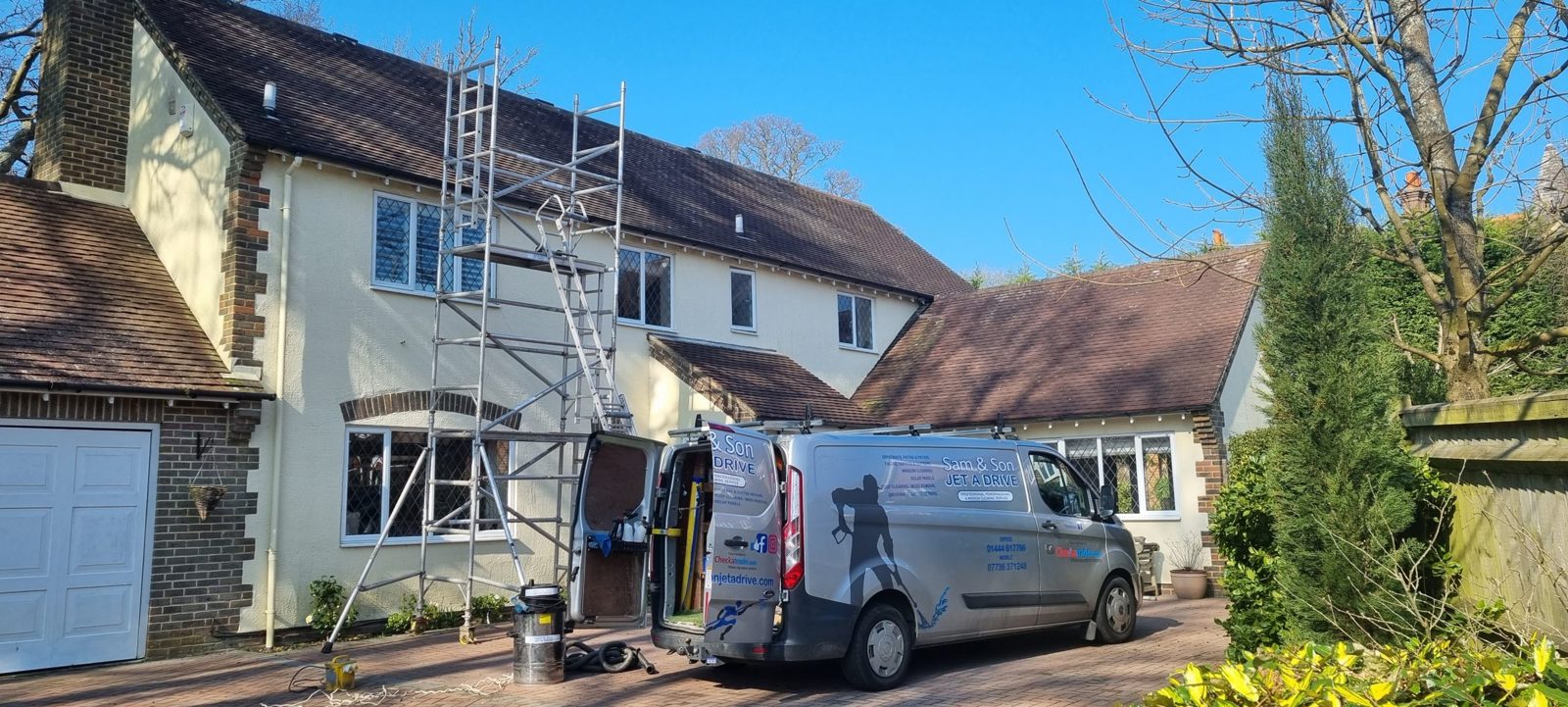
Roof cleaning and treatment
Roof cleaning across Sussex We recently travelled across Sussex to assist a homeowner whose property was showing significant signs of organic growth and…
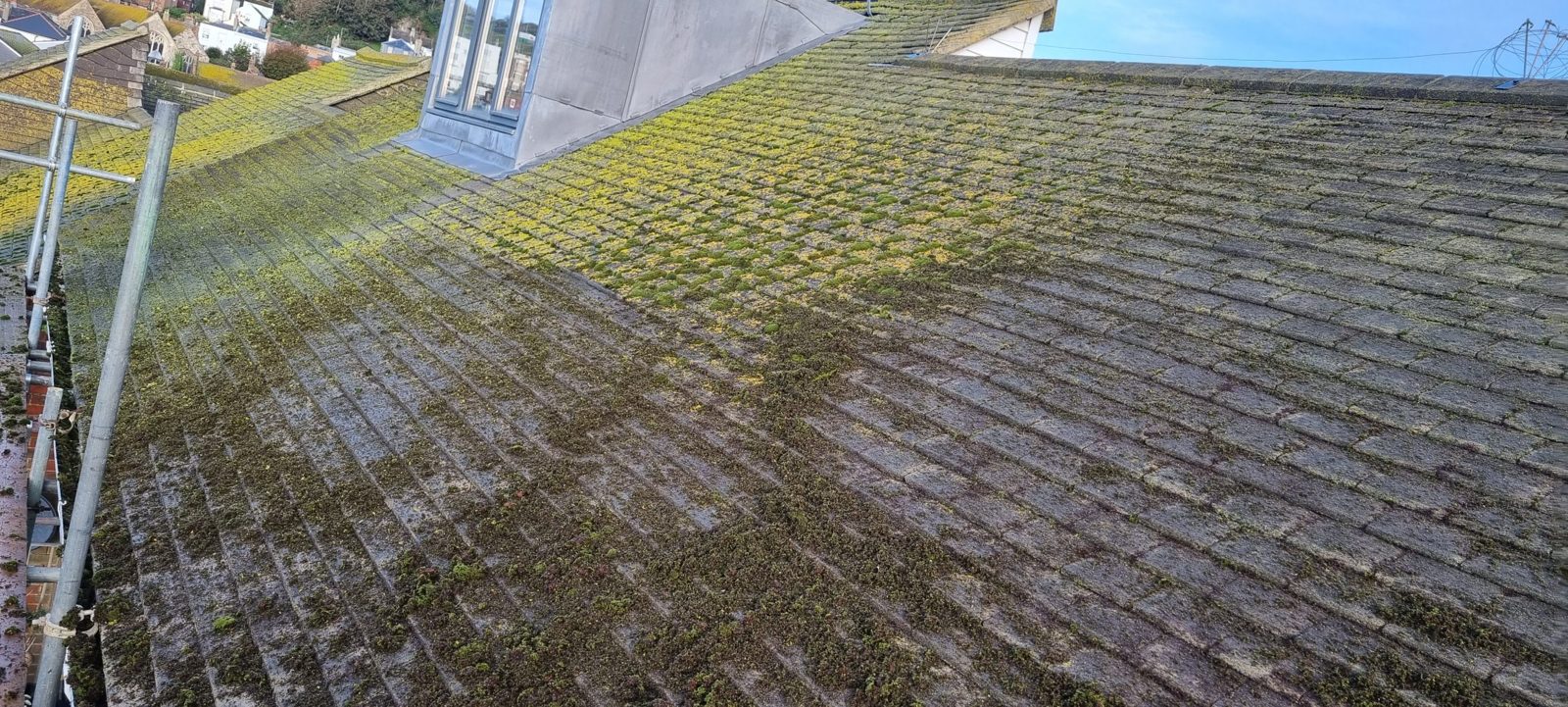
Roof cleaning in Hastings
Roof cleaning in Hastings We recently made the trip across Sussex to Hastings to assist a homeowner whose roof had become heavily weathered and overgrown with…
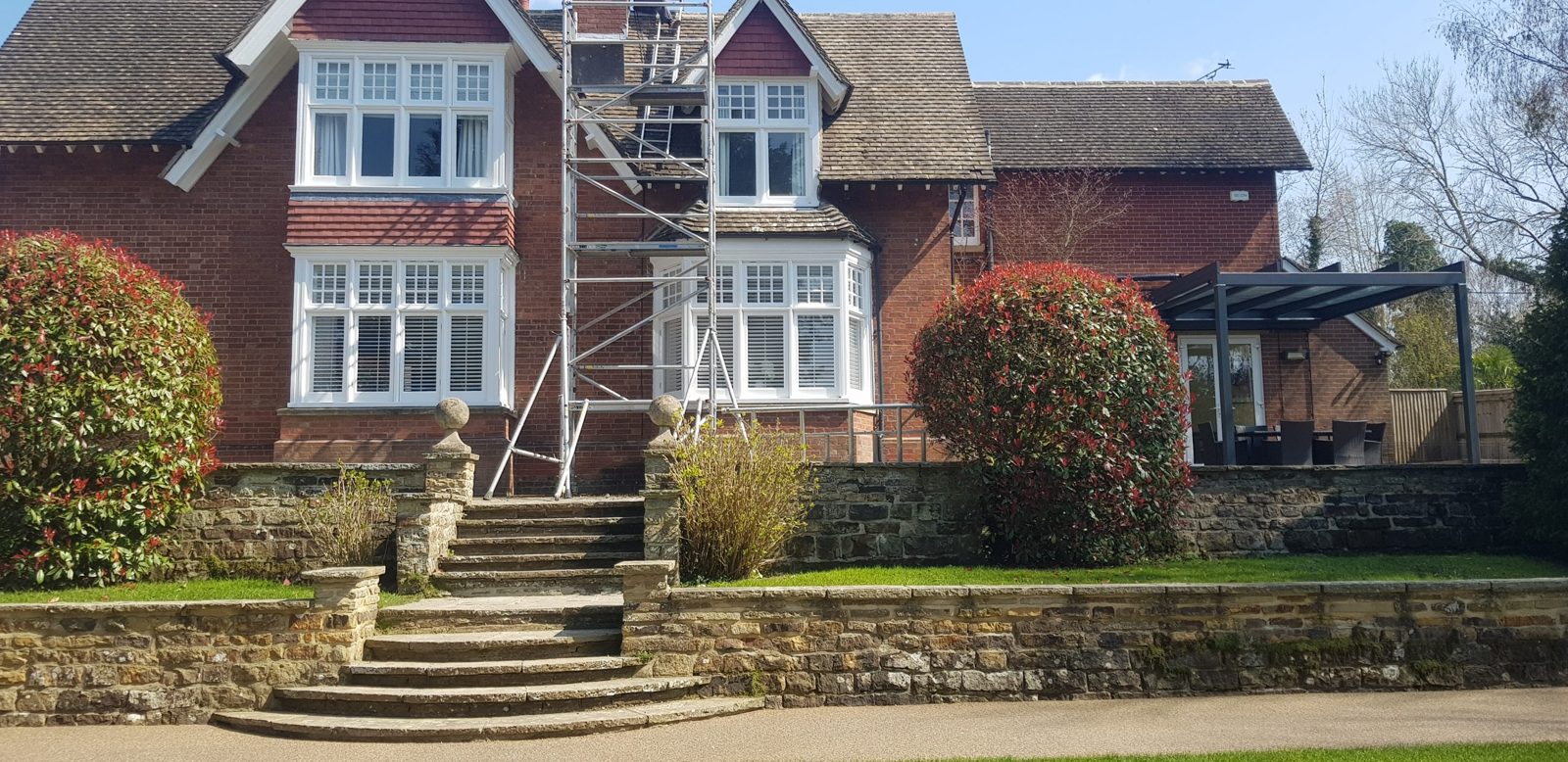
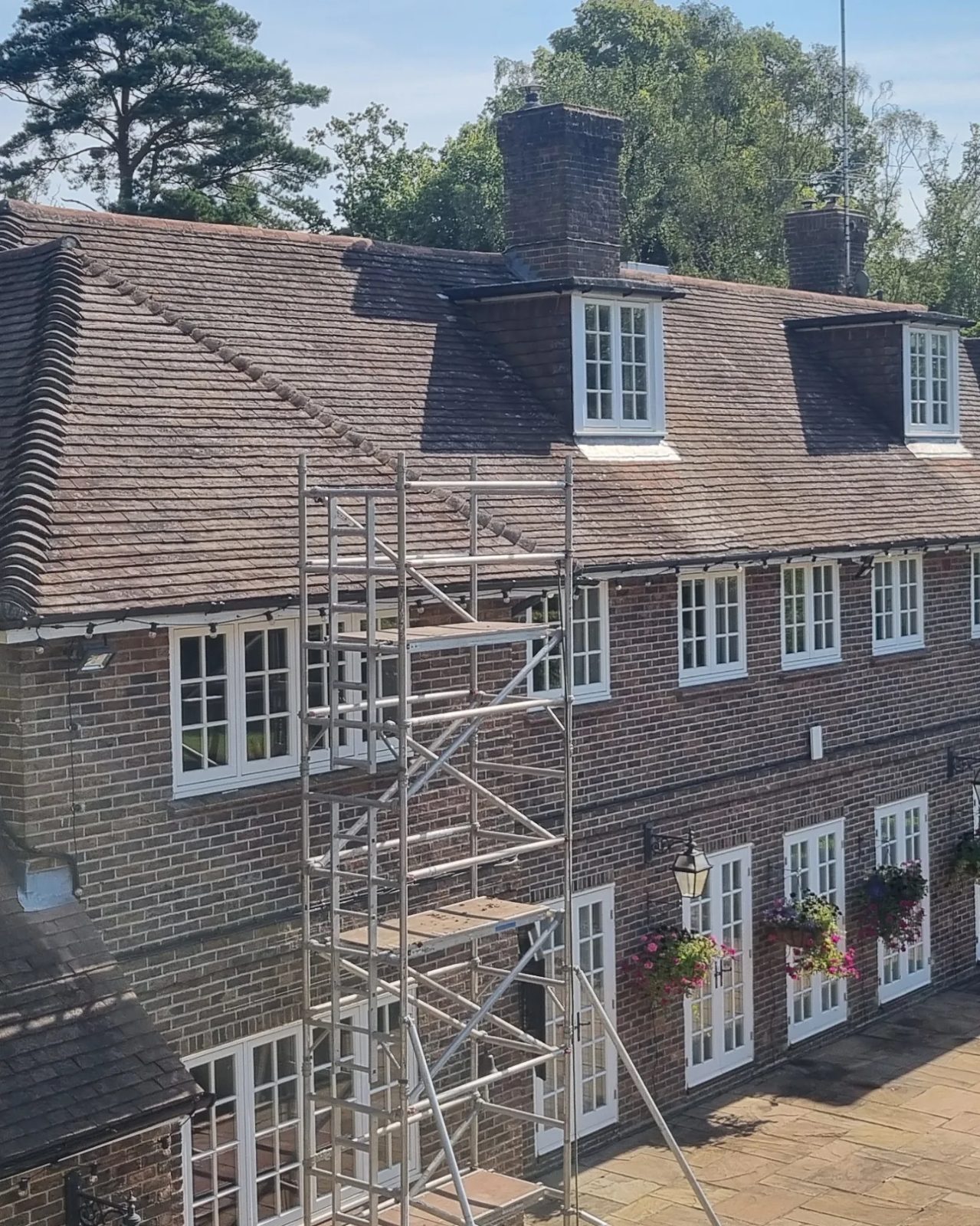
Of a very lovely sunny day another happy customer roof cleaning in Haywards Heath
Roof cleaning on a sunny morning in Haywards Heath We recently headed out to a beautiful property in Haywards Heath on a particularly glorious sunny morning to…
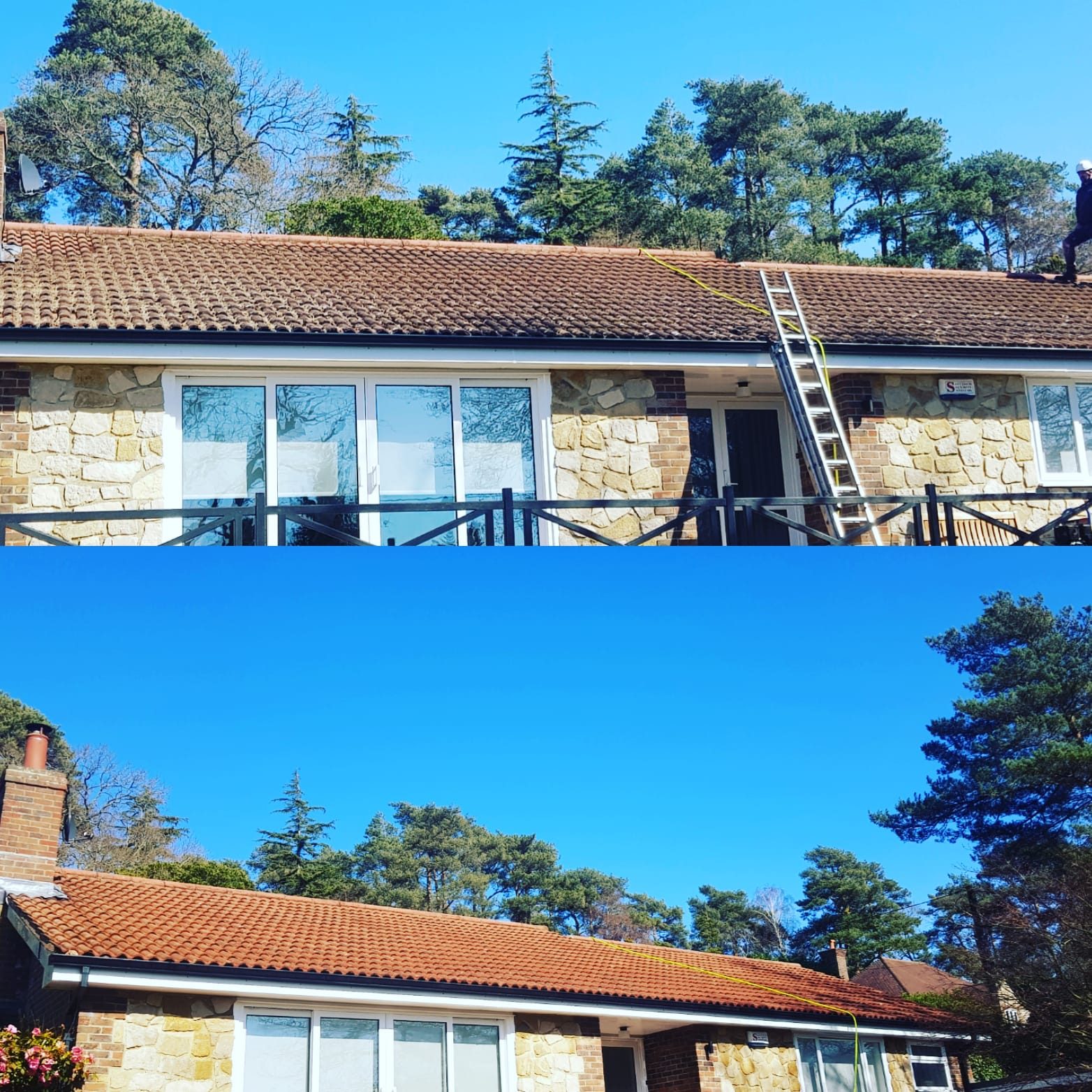
Weathered roof cleaned and treated on Victoria Road, Haywards Heath
Roof cleaning on Victoria Road We were recently called out to a property on Victoria Road in Haywards Heath to address a roof that had become heavily weathered…
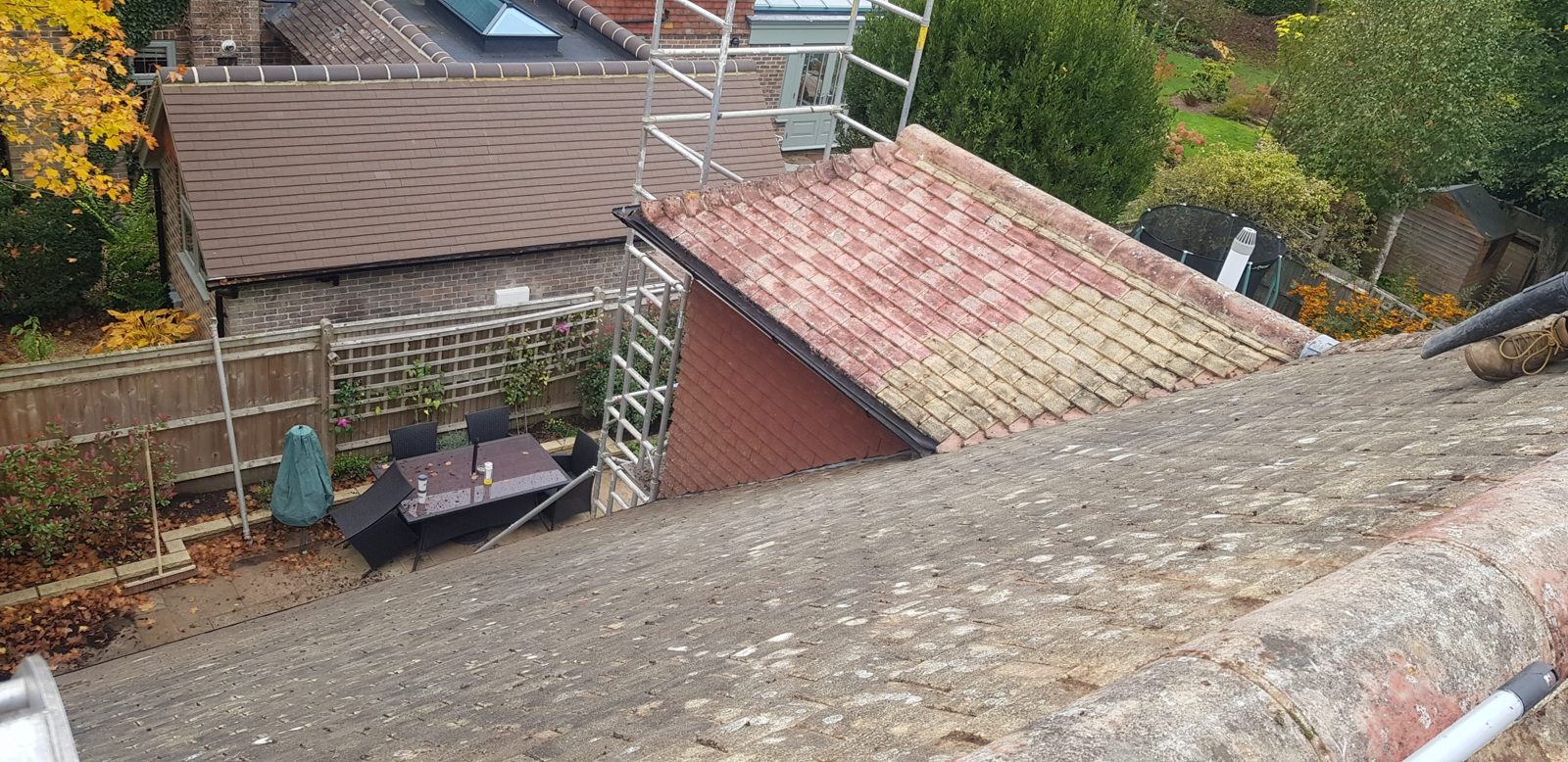
Roof cleaning and treated with an antifungal moss wash
Roof moss removal in Sussex We recently visited a property in the heart of Sussex where the homeowners were becoming increasingly concerned about the heavy…
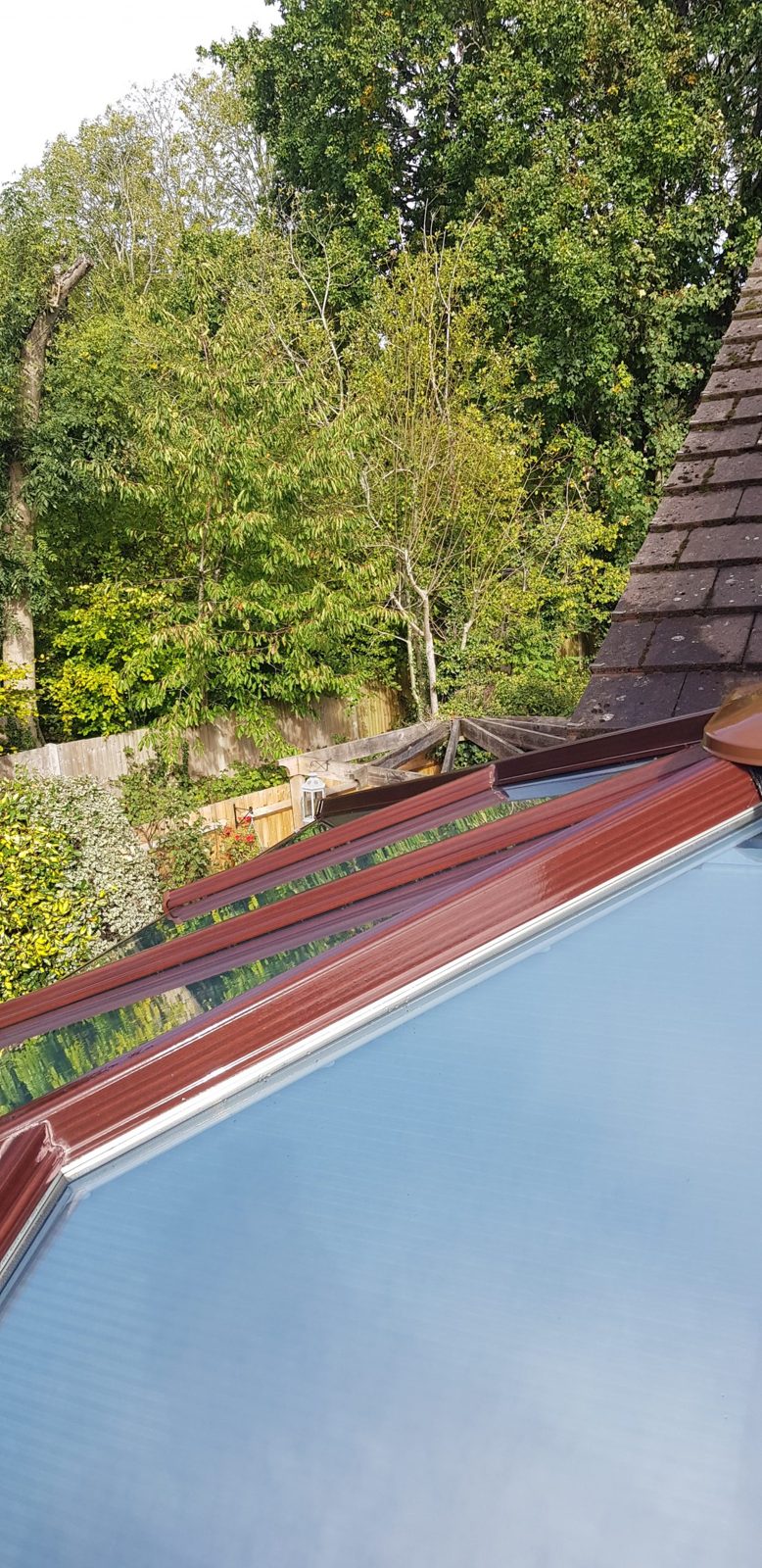
Conservatory cleaning for regular customer
A regular conservatory cleaning in Sussex We recently returned to a familiar property in Sussex to carry out a comprehensive conservatory cleaning for one of…
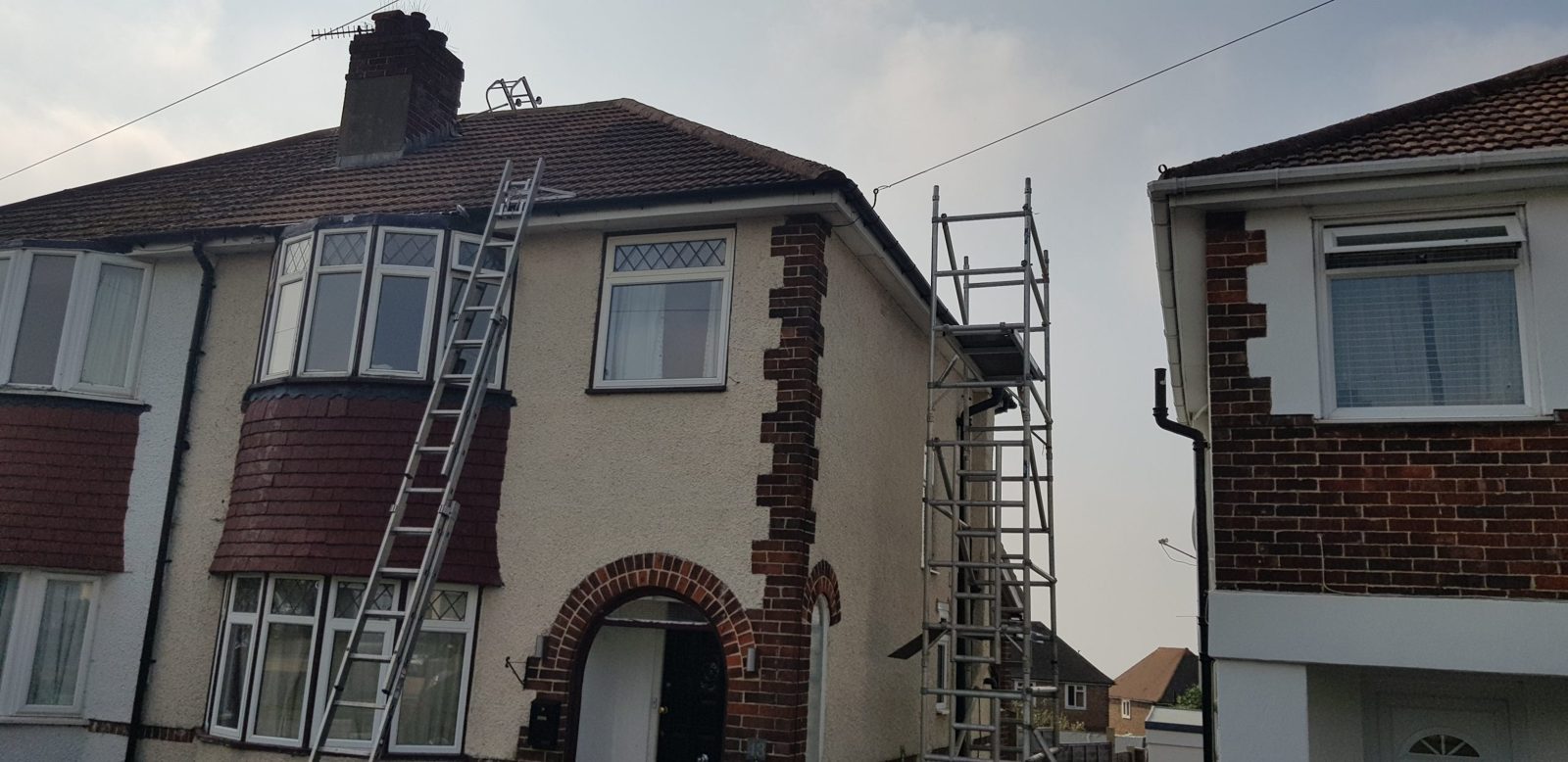
Roof cleaning and treated with an antifungal Moss wash job located in Brighton
Roof cleaning in Brighton We recently travelled over to Brighton to assist a homeowner whose property was suffering from a significant build-up of moss and…
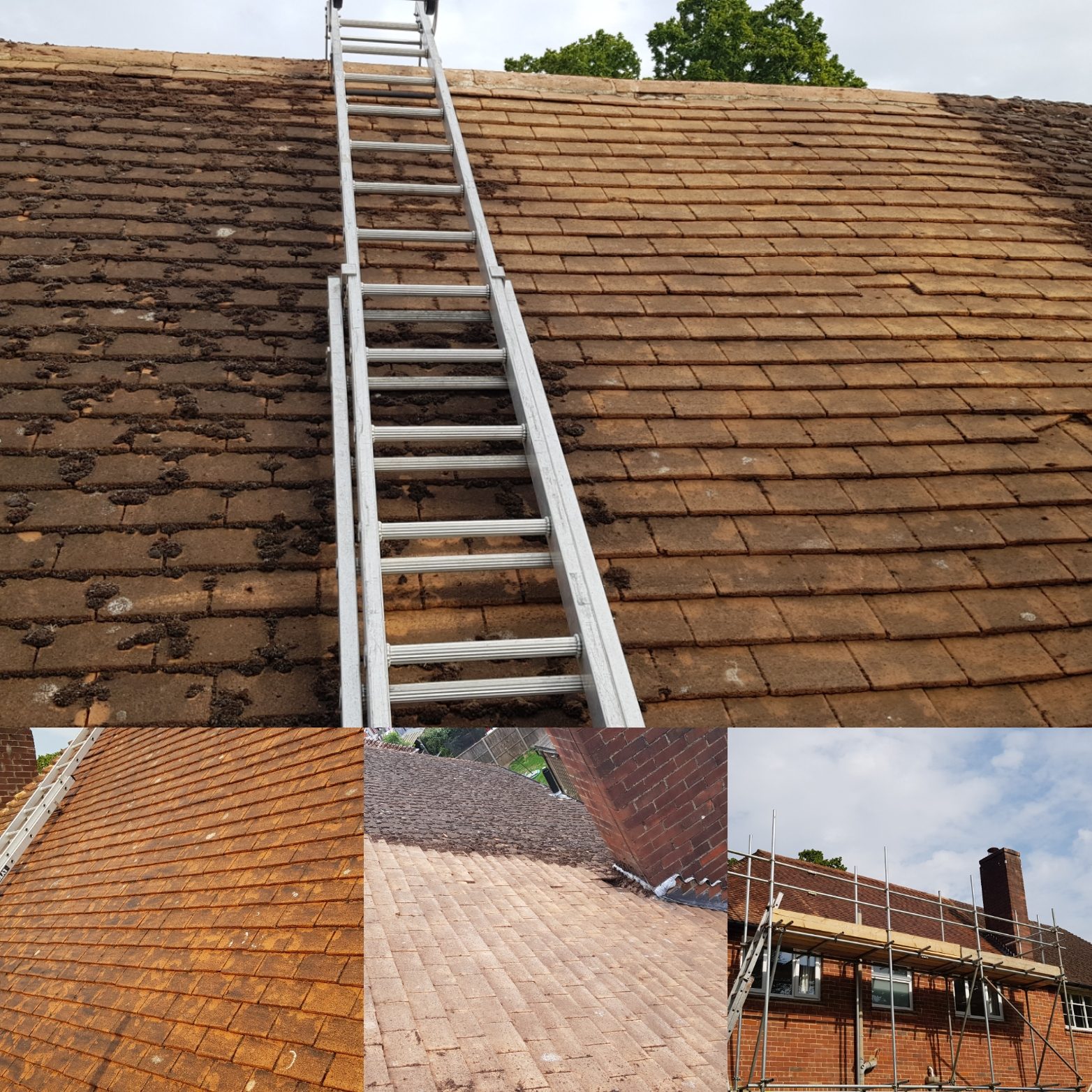
Roof cleaning and treated with an antifungal mosque wash in Lower Beeding
Roof cleaning in Lower Beeding We were recently called out to a lovely property in Lower Beeding where the homeowners were concerned about the deteriorating…
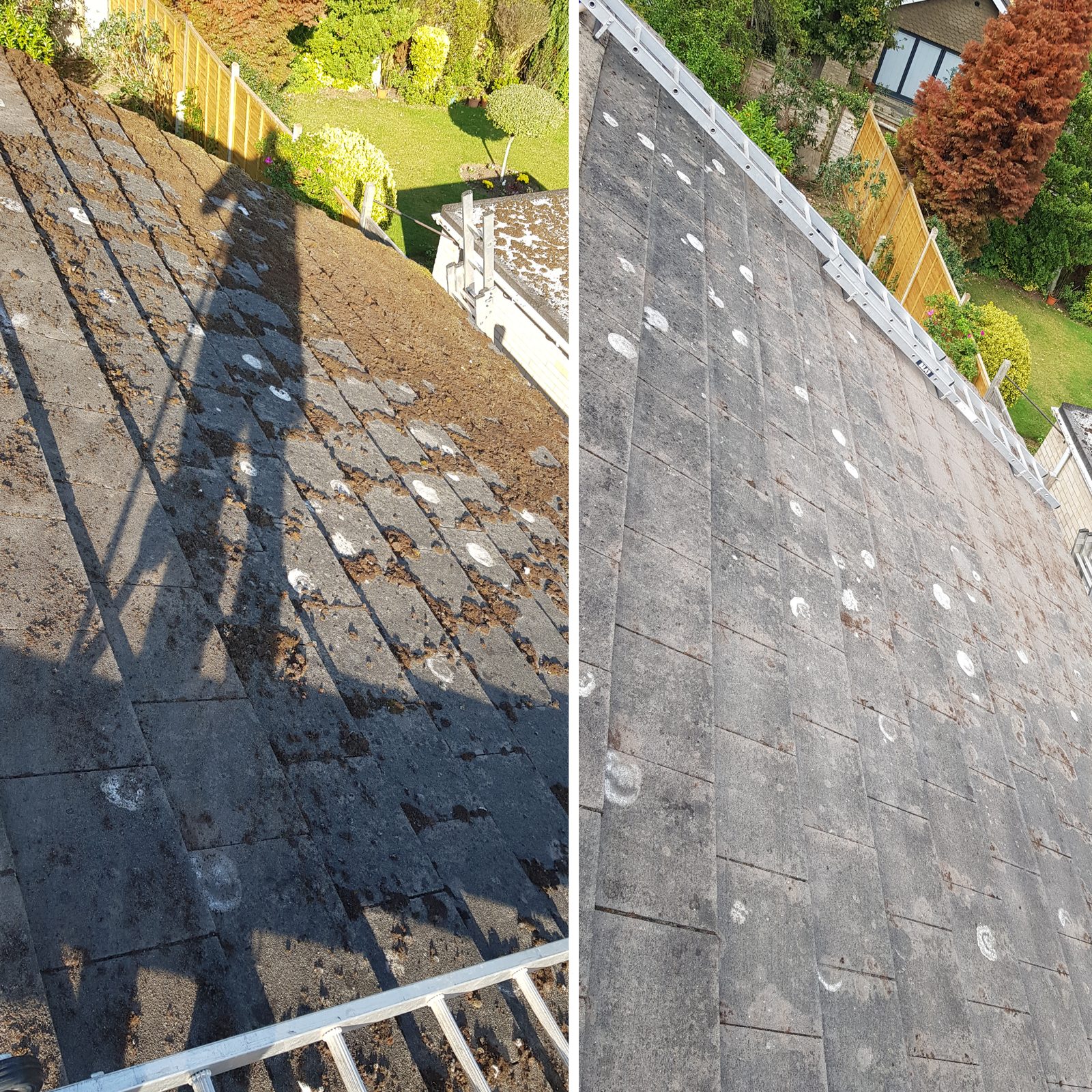
Roof cleaning and demossing today in oak Hall Park Burgess Hill
Roof cleaning in Oak Hall Park We recently visited a property in the Oak Hall Park area of Burgess Hill to carry out a comprehensive roof cleaning and demossing…
How we clean and treat a roof, step by step
1. Survey and access
We assess the covering type, pitch and condition, check ridge tiles, verges, flashings and any slipped or cracked tiles, and plan safe access with ladders, roof ladders or a tower as the building requires.
2. Gutters first
Gutters, valleys and hoppers are cleared and protected before anything comes off the roof, so debris cannot wash straight into the drainage system.
3. Moss and growth removal
All moss and growth is removed by hand scraping and brushing only. We do not pressure wash roofs at all — even on the lowest setting, pressure washing strips the protective surface from tiles, forces water under the laps, and damages pointings.
4. Biocide treatment
A biocidal wash is applied across the roof to kill remaining spores and lichen at the root, so the roof continues to clear naturally over the following months and stays clear for far longer.
Why we never pressure wash a roof
There is a widespread and expensive misunderstanding that a roof should be pressure washed clean. On concrete interlocking tiles the surface layer of cement and colour pigment is only a fraction of a millimetre thick. Blast it with a pressure lance and the moss comes off, along with the very surface that was protecting the tile — which is why some pressure-washed roofs green up worse than before within two or three years.
We do not pressure wash roofs at all, on any covering, at any pressure setting. Even on the lowest setting, pressure washing strips the protective surface from concrete tiles, forces water under the laps, and damages ridge and verge pointings. Instead we use a soft wash approach: physically remove the bulk of the moss by hand scraping, then apply a biocidal treatment and let the chemistry finish the job over the following weeks. It is less instantly dramatic on day one and considerably better for the roof, and the results last far longer.
Slate and clay are a different case again. Natural slate is brittle and delaminates, older clay tiles can be porous and frost-damaged, and both can be cracked simply by being walked on carelessly. On those roofs the work is almost entirely hand and treatment-based, with proper roof ladders spreading the load.
- Concrete interlocking and plain tiles
- Clay pantiles, plain tiles and peg tiles
- Natural and fibre cement slate
- Flat roofs — felt, EPDM and GRP
- Conservatory roofs, glass and polycarbonate
- Garages, outbuildings, barns and commercial units
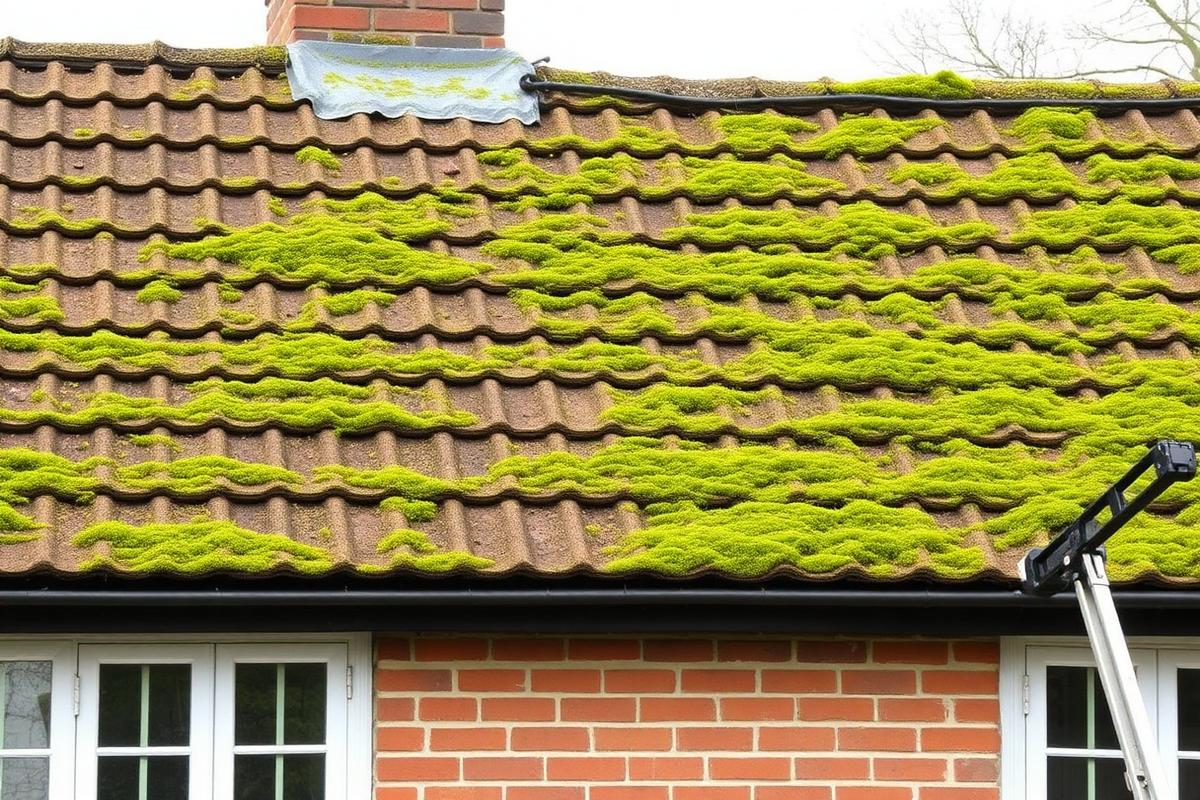
What moss actually does to a building
Water is the mechanism behind nearly all of it. A saturated moss layer keeps tiles permanently damp, and when that water freezes it expands, spalling the tile surface and opening up hairline cracks. Over years this shortens the working life of an otherwise sound roof covering considerably.
The more immediate problem is drainage. Loose moss travels: it slides down the pitch, gathers in valleys, drops into the gutter, and lodges in the outlet. Once the outlet is blocked, the gutter fills, overflows and runs down the fascia and wall. That is how you end up with damp patches on internal walls, rotten fascia boards and stained render, all traceable back to moss on the roof.
There is a weight consideration too. Dry moss is light; a saturated mat across a large roof plane is not, and on older or already-stressed structures that additional loading is worth taking seriously. Clearing it, and keeping it clear, is straightforward preventative maintenance rather than cosmetics.
Safe access and working practices
Roof work is height work, and we treat it as such. Access is planned before the job, not improvised on the day: correctly footed ladders, roof ladders to spread load rather than walking directly on tiles, and scaffolding or a tower where the pitch, height or condition of the roof calls for it. We carry full public liability insurance and will confirm the details before starting.
Ground protection matters just as much. Moss coming off a roof arrives in volume, so drives, patios, planting and paths beneath the work are sheeted, and everything is collected, bagged and taken away rather than raked into a border. Gutters are re-checked and flushed at the end of the job, and downpipes are tested to make sure water is running away freely.
We will also flag anything we find while we are up there — slipped tiles, cracked ridge mortar, missing verge pointing, a failing flashing, a soil vent pipe collar that has perished. Small repairs we can usually deal with there and then; anything larger we will describe clearly with photographs so you can decide what to do.
How long the result lasts
A roof that is physically cleared and then properly treated with biocide will typically stay looking good for several years, far longer than a roof that has only been washed. North-facing pitches, roofs overhung by trees and properties in damp valleys will always regrow faster than a south-facing roof in open air, and we will give you a realistic expectation for your particular building rather than a sales figure.
Many customers pair a roof clean with gutter clearance, and soffit and fascia cleaning, since the access is already in place and it makes far more sense to do the whole rainwater system in one visit. We are happy to quote for any combination and price it as a single job.